
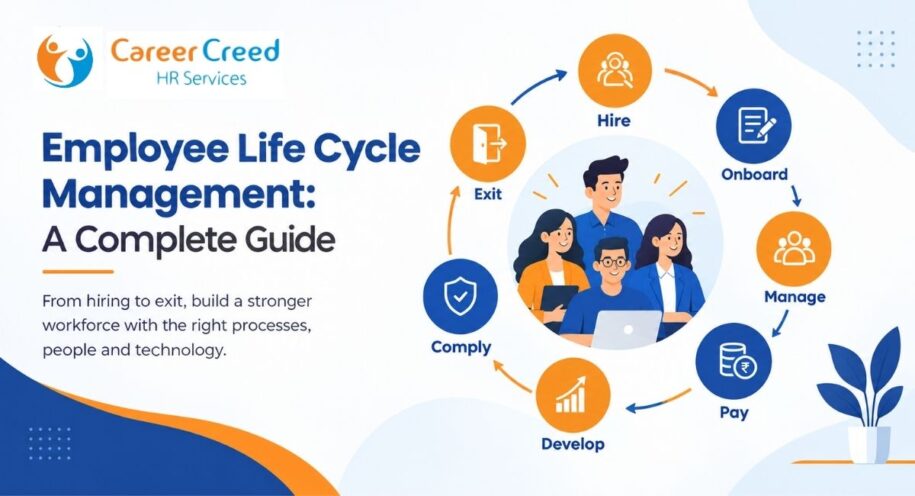
Every business, big or small, goes through the same journey with its people — hiring them, helping them grow, and eventually seeing them move on. This journey is called employee life cycle management, and how well a company handles it decides whether employees stay happy, productive, and loyal, or leave within a few months. For startups and growing businesses, getting this right isn’t just an HR task — it’s a growth strategy.
In this article, we’ll break down what the employee life cycle really means, why it matters, and how businesses can manage it better without feeling overwhelmed.
What Is an Employee Life Cycle?
The employee life cycle is simply the different stages an employee goes through during their time with a company. Think of it like a journey with a clear beginning, a middle full of growth and experiences, and an end. It starts the moment someone applies for a job and continues until they exit the organisation.
Most experts break the HR life cycle into five to six stages:
- Attraction – Building a brand that makes people want to work for you
- Recruitment – Finding and hiring the right talent
- Onboarding – Welcoming new employees and setting them up for success
- Development – Training, upskilling, and career growth
- Retention – Keeping employees engaged and satisfied
- Exit/Separation – Managing resignations, retirements, or terminations smoothly
Each of these stages needs attention. Miss one, and the whole employee experience can fall apart.
Why Employee Life Cycle in HR Matters So Much
Many small businesses think HR is just about hiring people and processing salaries. But the truth is, the employee life cycle in HR covers a lot more than that. It shapes how people feel about their jobs, how long they stay, and how much effort they put in.
Here’s why it matters:
- Better hiring decisions – When you understand the full life cycle, you hire people who actually fit your company culture, not just their resume.
- Higher retention – Employees who feel supported at every stage are less likely to quit.
- Stronger employer brand – Happy employees talk. And in today’s world, that word-of-mouth reputation matters more than ever.
- Cost savings – Replacing an employee is expensive. Managing the life cycle well reduces turnover costs significantly.
For startups especially, where every team member wears multiple hats, losing someone mid-project can be a huge setback. That’s why paying attention to the full journey — not just hiring — is so important.
HR Role in Employee Life Cycle
The HR role in the employee life cycle is like that of a guide who walks with the employee through every stage. HR isn’t just handling paperwork; they’re shaping the entire experience.
Here’s what HR typically does at each stage:
During Attraction and Recruitment:
HR builds job descriptions that actually reflect the role, screens candidates fairly, and makes sure the hiring process doesn’t drag on forever. A slow or confusing hiring process can scare away good talent.
During Onboarding:
This is where first impressions are made. A good onboarding process helps new hires understand their role, meet their team, and feel comfortable within the first few days. Companies that skip proper onboarding often see new employees leave within the first three months.
During Development:
HR arranges training, tracks performance, and creates growth paths. Employees who don’t see a future in a company rarely stick around, no matter how good the salary is.
During Retention:
This includes regular feedback, fair appraisals, healthy work culture, and sometimes just listening to what employees actually need. Retention isn’t always about money — sometimes it’s about respect and recognition.
During Exit:
Even when someone leaves, HR’s job isn’t done. A proper exit interview and smooth offboarding process leave a good impression, and sometimes, that former employee becomes a client, referral, or even a boomerang hire later.
Talent Management Life Cycle vs Employee Life Cycle
People often confuse these two terms, so let’s clear it up. The talent management life cycle focuses more on identifying, developing, and retaining high-potential employees — basically nurturing future leaders within the company. The employee life cycle, on the other hand, covers every single employee’s journey, from the day they join to the day they leave.
Both are connected, though. A strong HR employee life cycle process naturally supports better talent management because it ensures every employee, not just top performers, gets a fair chance to grow.
Common Challenges Businesses Face
Managing the life cycle sounds simple in theory, but in practice, many businesses struggle with:
- Manual processes that eat up time (spreadsheets for attendance, payroll, and records)
- Inconsistent onboarding experiences
- Lack of proper feedback systems
- No clear growth path for employees
- Poor exit management, leading to bad reviews or legal issues
These challenges get bigger as a company grows. What worked for a 10-person startup often breaks down when the team reaches 50 or 100 employees.
How Technology Is Changing Employee Life Cycle Management
This is where employee life cycle management in HR has evolved a lot in recent years. HRMS (Human Resource Management System) software has made it possible to manage the entire life cycle from one platform.
Instead of juggling multiple tools for attendance, payroll, performance tracking, and exit formalities, businesses can now automate most of this. It saves time, reduces errors, and gives HR teams more room to focus on people instead of paperwork.
For growing businesses in Delhi NCR that don’t have the resources to build a large in-house HR team, outsourcing this function to experts makes a lot of sense. This is exactly where a Career Creed HR Services comes in — helping startups and growing businesses manage their entire HR life cycle, from hiring to exit, with the support of smart HRMS software. Instead of hiring a full HR department, businesses can rely on outsourced experts who already know what works.
Simple Tips to Improve Your Employee Life Cycle
If you’re running a startup or a growing business, here are a few practical things you can start doing right away:
- Write clear, honest job descriptions before hiring
- Create a simple onboarding checklist for new joiners
- Schedule regular one-on-one check-ins with employees
- Offer small, achievable growth opportunities
- Ask for feedback during exit interviews, and actually use it
None of these need a big budget. They just need consistency.
Final Thoughts
Managing the employee life cycle well isn’t about following a fancy HR trend — it’s about treating people right at every stage of their journey with your company. From the first interview to the final goodbye, every interaction shapes how employees feel about your business.
For growing companies that don’t have time to manage all of this in-house, working with HR experts and using the right HRMS tools can make the entire process much smoother. It’s not just about saving time — it’s about building a workplace people actually want to be part of.
Leave a Reply