

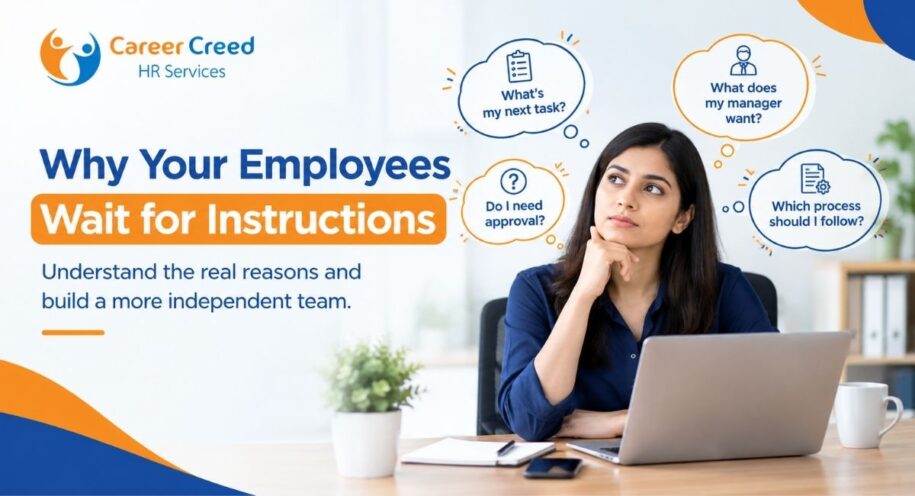
Have you ever noticed your team sitting idle, waiting for you to tell them what to do next? If you’ve searched for why your employees wait for instructions, you’re not alone. This is one of the most common frustrations business owners and managers face, especially in fast-growing startups where everyone is expected to move quickly and think on their feet. The good news is that this problem almost always has a fixable root cause, and once you understand it, you can turn a passive team into a proactive one.
Employees May Not Know What Is Expected
One common reason employees wait for instructions is that their responsibilities are not clearly defined.
A job title alone does not tell an employee everything they need to know. They should understand their key responsibilities, expected results, reporting structure, and the decisions they can make independently.
For example, if someone is responsible for recruitment but does not know whether they can shortlist candidates, schedule interviews, or communicate with candidates without approval, they will naturally keep checking with their manager.
Clear job descriptions, defined processes, and simple SOPs can reduce this confusion.
Lack of Clear Processes Creates Dependency
Imagine an employee joining a company where every process is explained differently by different people.
For one task, the manager says to send an email. For another, HR says to fill out a form. The next time, someone asks the employee to use WhatsApp instead.
After facing this several times, the employee learns one simple habit: ask before doing anything.
This is why companies need basic HR processes, especially as they grow. Processes for attendance, leave, recruitment, onboarding, employee requests, approvals, performance reviews, and exits give employees a clear path to follow.
Career Creed’s HR Foundation Setup, for example, focuses on HR policies, documentation, processes, SOPs, employee records, and HRMS setup to create a more structured HR function.
Fear of Making the Wrong Decision
Sometimes employees are not waiting because they are unwilling to work. They are waiting because they are afraid of making a mistake.
This usually happens when managers frequently correct employees for taking decisions without asking or react strongly when something goes wrong.
Eventually, employees learn that asking for permission feels safer than taking responsibility.
A better approach is to clearly define which decisions employees can make themselves and which ones require approval.
For example:
- Routine customer follow-ups can be handled independently.
- Small operational decisions can be made within defined limits.
- Financial commitments above a certain amount require approval.
- Major employee or legal decisions are escalated to management.
When employees know their boundaries, they can work with more confidence.
Micromanagement Can Make Employees Passive
Micromanagement often starts with good intentions. A manager wants work to be completed correctly, so they start checking everything.
But when every email, task, document, or decision needs approval, employees slowly stop thinking independently.
They begin to wait.
Instead of asking, “What is the best way to solve this?”, they start asking, “What does my manager want me to do?”
Managers should therefore focus more on outcomes than on controlling every small step.
Set the expected result, explain important boundaries, and allow employees to decide how to complete routine work.
Employees Need Regular Feedback
Another reason employees wait for instructions is that they do not know whether they are performing well.
If an employee receives feedback only during an annual appraisal, they may continue working without knowing what needs improvement.
Regular one-to-one conversations can help.
A manager can discuss:
- What was completed?
- What is currently in progress?
- What is causing difficulty?
- What decision is required?
- What should be improved next?
This creates a habit of ownership instead of dependency.
Performance management does not have to mean complicated paperwork. Even simple KRA/KPI discussions and regular reviews can help employees understand what success looks like.
Give Employees Access to Information
Employees often ask managers questions because the information they need is difficult to find.
Where is my leave balance?
Where can I download my salary slip?
What is the attendance process?
Where is the company policy?
Who approves my request?
When employees have to ask HR or management for every small piece of information, unnecessary dependency develops.
HR technology can help solve part of this problem. A proper HRMS can provide employees with access to attendance, leave, salary slips, HR documents, and requests through employee self-service. Managers can also get access to team information and approval workflows.
This does not remove the need for HR. It simply makes routine information easier to access.
Build Accountability, Not Just Instructions
There is a big difference between telling someone what to do and giving them ownership of a result.
For example, instead of saying:
“Call these five candidates today.”
A manager could say:
“Please complete the first round of candidate screening for this position today and share the shortlisted candidates with me.”
The second approach gives the employee responsibility for an outcome.
They may decide how to organise the calls, what information to collect, and how to prepare the shortlist.
Small changes like this can gradually improve ownership across a team.
Create a Workplace Where Questions Are Welcome
Encouraging independence does not mean telling employees to stop asking questions.
Questions are important, especially when someone is new or dealing with an unfamiliar situation.
The goal is to move from “Tell me exactly what to do” to “Here is the situation, and here is what I think we should do.”
Managers can encourage this by asking:
“What do you suggest?”
“What options have you considered?”
“What would you do if I were not available?”
These questions help employees develop problem-solving skills.
HR Structure Matters as a Company Grows
In a small startup, founders often manage hiring, employee questions, attendance, payroll, policies, and other HR matters themselves. As the team grows, this approach becomes difficult to maintain.
Employees may not know whom to approach, managers may become overloaded, and routine HR decisions can keep coming back to the founder.
A structured HR function helps create clear ownership across the employee lifecycle — from recruitment and onboarding to employee management, payroll, compliance, development, and exit. Career Creed describes this model as an “Extended HR Department,” combining HR expertise with HRMS technology and structured processes.
The objective is not to make employees completely independent. It is to make sure they have the information, processes, tools, and authority needed to handle appropriate responsibilities themselves.
The Goal Is Confident Employees
Employees waiting for instructions is rarely solved by simply telling them to “take more initiative.”
First, look at the system around them.
Do they understand their role?
Are the processes clear?
Can they access the information they need?
Do they know which decisions they can make?
Are managers allowing them to make mistakes and learn?
Are expectations and performance discussed regularly?
When these areas are addressed, employees have a much better chance of becoming proactive.
Good HR is not only about hiring people or maintaining employee records. It is also about creating a workplace where people understand their responsibilities and have the support to perform them.
When employees know what is expected, have clear processes to follow, and feel trusted to make appropriate decisions, managers spend less time giving instructions and more time focusing on the business.
Leave a Reply